


01
Design from the application outward
A furniture panel, hotel corridor, retail fixture and protective surface do not ask the same thing from a material.

Our Philosophy
WrapForge approaches material design with restraint: understand the application, define the visual language, make the surface manufacturable, and communicate only what can be supported.
A furniture panel, hotel corridor, retail fixture and protective surface do not ask the same thing from a material.
Colour establishes direction; texture, sheen and grain create depth and material character.
A finish is more useful when its intended appearance can survive the transition from sample to repeatable production.
Technical content, material information and project guidance should help a decision rather than simply fill a page.
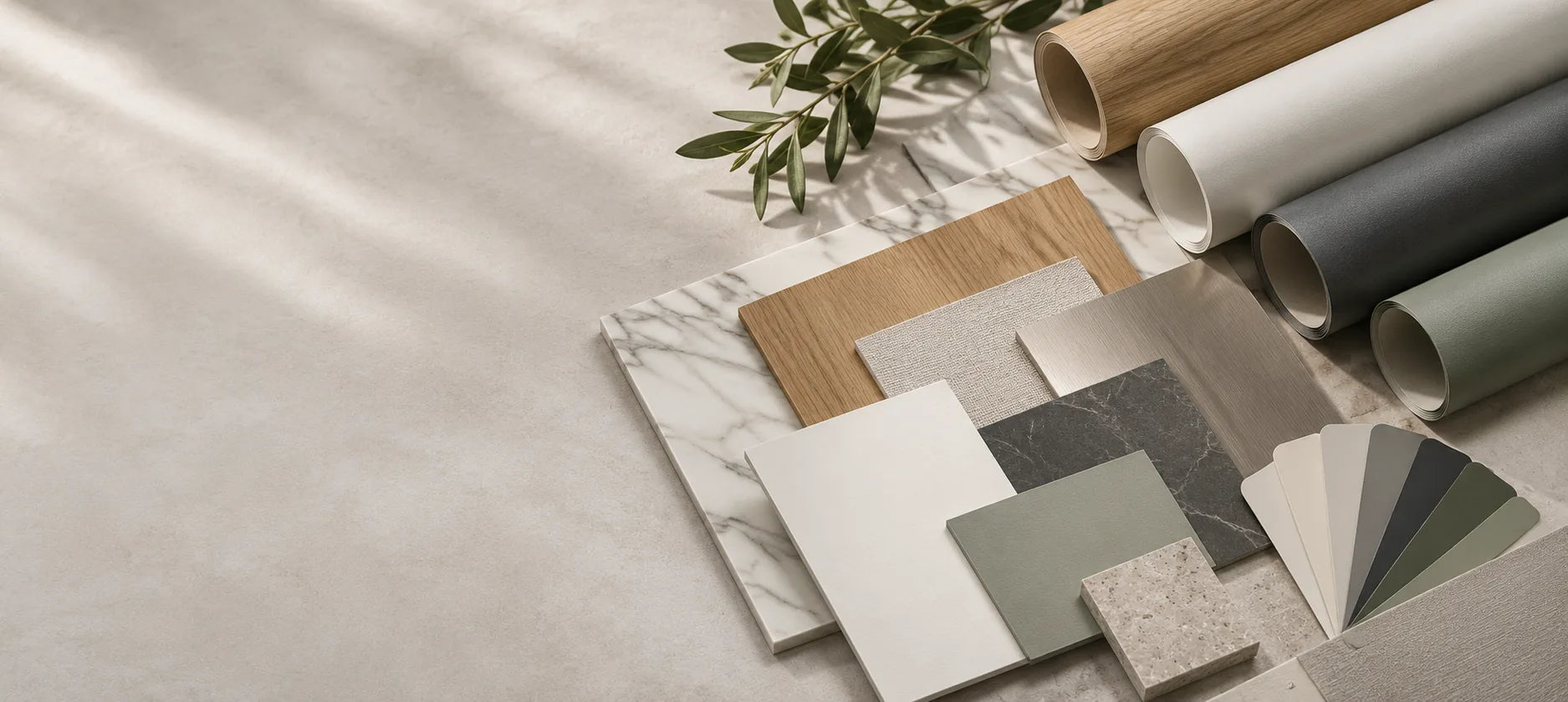
Material honesty
Macro texture, edge detail, light response and installation context often explain more than a distant room image. We use both: atmosphere for inspiration and detail for specification.
Proportion, tone, pattern, texture and the emotional impression of a surface.
Application, handling, maintenance, manufacturability and the evidence needed to specify responsibly.
Renewal
Surface-led renovation can create a new visual direction for existing furniture and interior elements. Where appropriate, this can help extend useful life and reduce the need for complete replacement. The exact environmental benefit depends on project conditions and should not be overstated without supporting data.
How philosophy guides decisions
Ask where the material will live, how it will be handled and what the client wants the surface to communicate.
Use samples to compare colour, texture and construction before committing to scale.
Keep technical information, approvals and project requirements visible throughout the process.
Link material choice to installation, care, technical documents and project support.
From principle to material
The Material Library brings product families, visual directions, applications and resources into one place.